

INTRODUCTION
Many business owners believe that creating a logo means their branding is complete. While a logo is important, it is only one small part of a much larger system.
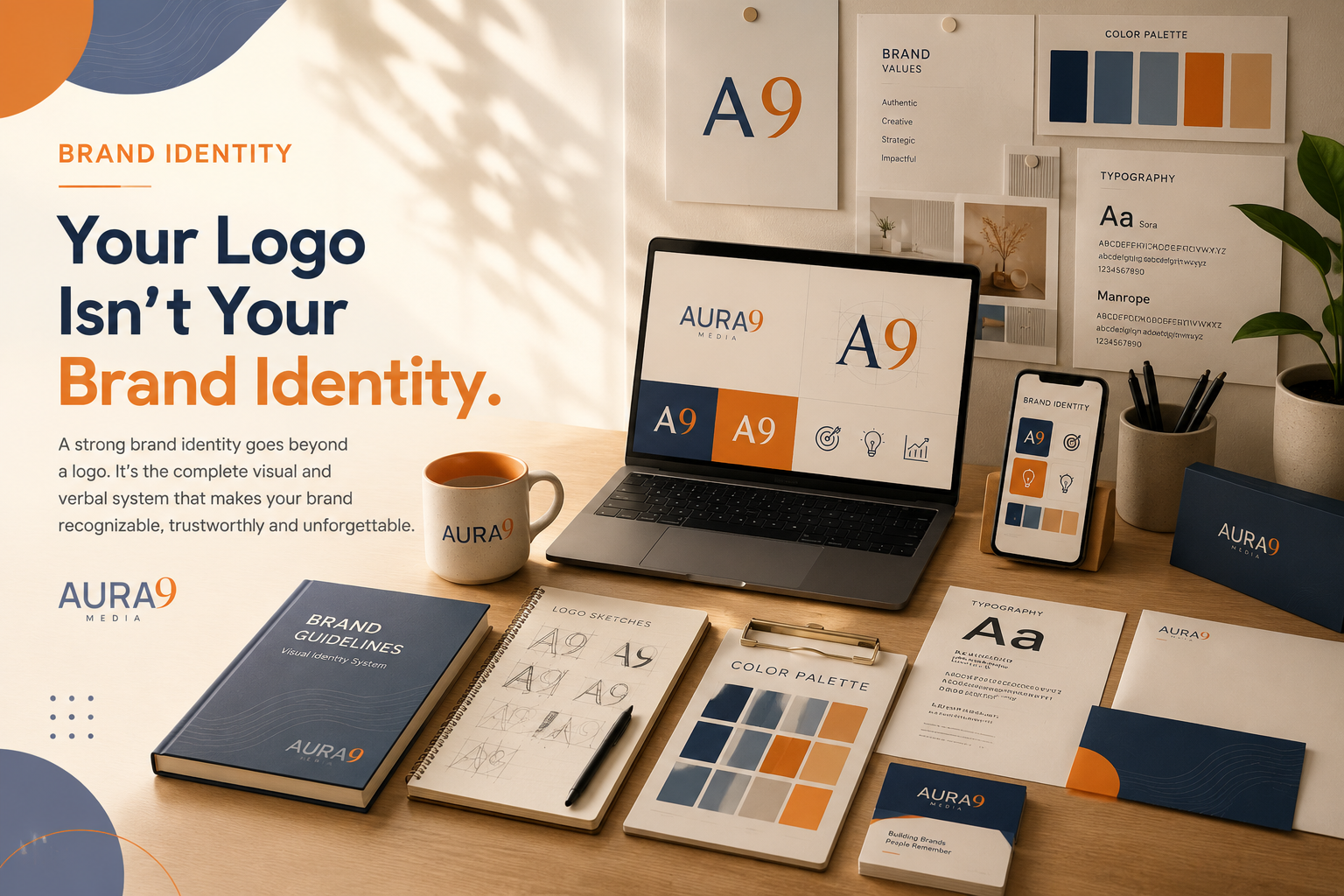
A strong brand identity is the complete visual and verbal language of your business. It shapes how people recognize you, trust you, and remember you across every interaction—from your website and social media to your packaging and customer experience.
If brand strategy defines who you are, brand identity defines how the world experiences you.
What Is Brand Identity?
Brand identity is the collection of visual and communication elements that consistently represent your business.
It includes everything customers see and interact with, creating a recognizable and memorable experience.
A complete brand identity includes:
- Logo System
- Brand Colors
- Typography
- Iconography
- Photography Style
- Graphic Elements
- Brand Voice
- Stationery
- Social Media Design
- Website Design Language
- Packaging & Marketing Materials
Together, these elements create a professional image that builds familiarity and trust.
Brand Strategy vs Brand Identity
Many people confuse these two terms, but they serve different purposes.
Brand Strategy answers:
- Who are we?
- Who is our audience?
- What do we stand for?
- How are we different?
Brand Identity answers:
- How should we look?
- How should we communicate?
- How should customers recognize us instantly?
Think of it this way:
Strategy is the blueprint. Identity is the architecture people see.
Without strategy, identity lacks meaning. Without identity, strategy remains invisible.
Why Brand Identity Matters
Customers make impressions within seconds.
Before reading your website or speaking with your team, they notice your visual presentation.
A professional identity helps your business:
- Build trust faster
- Look established
- Increase brand recognition
- Stand out from competitors
- Improve customer recall
- Create consistency across every platform
People may forget what you said, but they rarely forget how your brand made them feel.
The Elements of a Strong Brand Identity
A successful identity system goes far beyond designing a beautiful logo.
It should include:
Logo System
Primary logo, alternate logo, icon, favicon, and responsive versions.
Color Palette
A carefully selected palette that reflects your brand personality and remains consistent across digital and print.
Typography
Fonts that communicate professionalism while remaining easy to read.
Visual Language
Photography style, illustrations, layouts, icons, spacing, and graphic patterns.
Brand Guidelines
A document that explains exactly how every visual element should be used to maintain consistency.
Common Brand Identity Mistakes
Many businesses unknowingly weaken their brand by making these mistakes:
- Using different logos across platforms
- Changing colors frequently
- Mixing multiple font styles
- Inconsistent social media designs
- Poor-quality marketing materials
- No clear design guidelines
Consistency is often more valuable than complexity.
How Brand Identity Builds Business Growth
A strong identity creates confidence.
Customers naturally trust businesses that appear organized, professional, and consistent.
Over time, that trust translates into:
- Higher brand recognition
- Better customer loyalty
- Stronger referrals
- Premium positioning
- Improved marketing performance
Brand identity is not simply about looking attractive—it helps create long-term business value.
Final Thoughts
Your logo is only the beginning.
A memorable brand is built through a complete identity system that communicates professionalism, consistency, and purpose across every customer touchpoint.
When your visuals, messaging, and experience work together, your business becomes easier to recognize, easier to trust, and much harder to forget.
Conclusion
Strong brands aren’t remembered because they have beautiful logos.
They’re remembered because every interaction feels consistent, intentional, and unmistakably them.
Invest in your brand identity, and you’re investing in how the world will remember your business.